Where the floors are
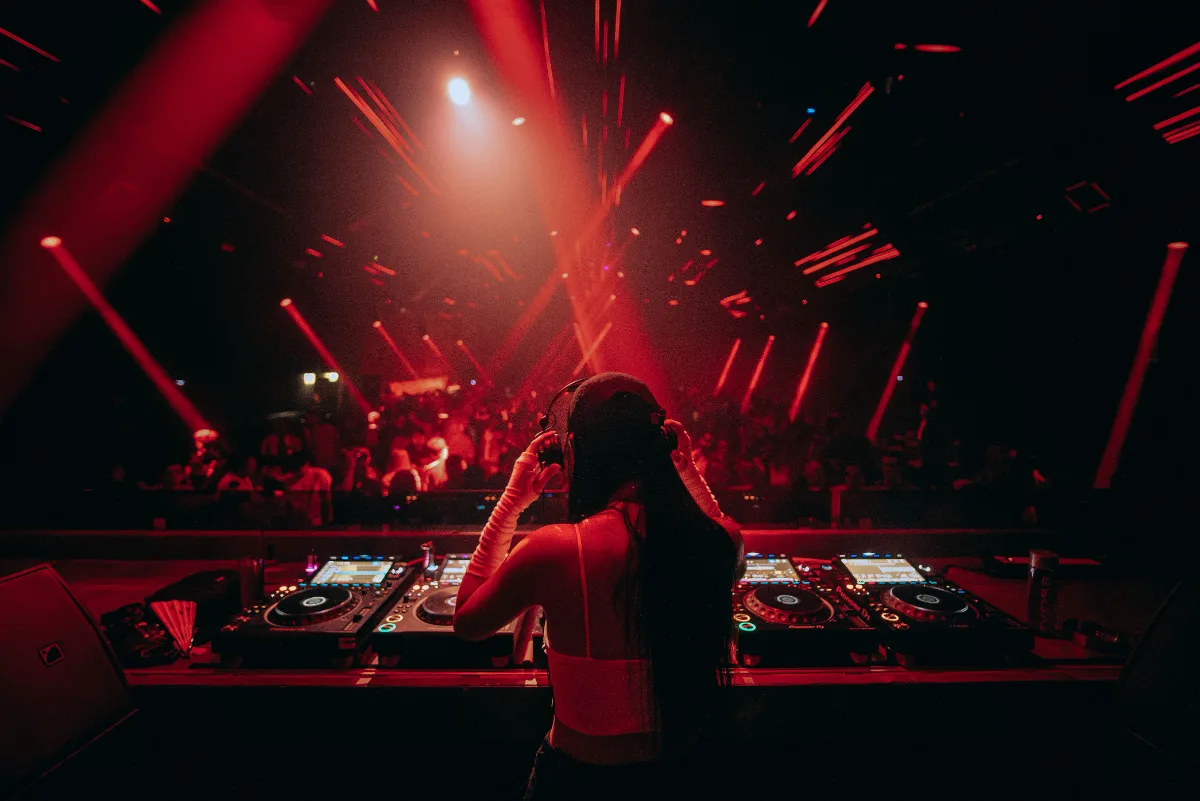
Toronto's techno nights don't live in one building. They move — an art gallery in April, an open-air floor by the water in July, an all-night session somewhere else again in August. If you want to find them, you follow people, not venues.
That's the part no listings site gets right, and it's why we started keeping our own record: every floor we've run, who played it, and where, when there was a place to name. The directory is the same idea pointed at the people rather than the parties.
We're SYN/TO. We book and run these nights. So what follows is not a survey of the city — it's what the city looks like from behind the booth, with the outside facts marked as facts and our opinions marked as ours.
The word arrived from Detroit. The second wave came from Ontario.
The word was in use before a record sleeve fixed it to a genre. In 1988 Virgin's UK imprint 10 Records put out a compilation assembled by Derrick May and A&R scout Neil Rushton; the working title was The House Sound of Detroit until Juan Atkins' track "Techno Music" pushed the whole thing in another direction, and Atkins, May and Kevin Saunderson refused to have their music filed as a regional flavour of house. The compilation went out as Techno! The New Dance Sound of Detroit, and the name stuck to everything that followed.
Detroit is one highway west of here. That proximity is not trivia. Plus 8, one of the labels that carried the second wave of Detroit techno out into the world, was founded in 1990 by Richie Hawtin and John Acquaviva and run out of Windsor, Ontario — the Canadian side of the river, looking straight across at Detroit. The sound that Berlin later made monumental was already crossing this border while it was still cheap and local.
We bring that up because Toronto techno gets described, tediously often, as an import. It isn't. The wire ran through Ontario early. What Toronto never built was the room.
Two in the morning is a law, not a mood
Here is the single fact that explains more about this city's nightlife than any think-piece about crowds or curation. In Ontario, licensed premises may sell and serve alcohol from 9:00 a.m. to 2:00 a.m., and every glass and bottle has to be off the tables 45 minutes after that. New Year's Eve buys you one extra hour. That's it.
Compare that to the club most people use as the yardstick. Berghain opened in 2004 in a former power plant in Friedrichshain, as a continuation of Ostgut. Our position, not the record's: its reputation rests on sessions long enough that a 6 a.m. arrival is a reasonable plan, and the difference between that and a Toronto Saturday is not taste and not talent. It's a licence.
A city that turns the lights on at 2:45 doesn't get a deep-night culture by accident. It gets one only if somebody builds it somewhere else.
Toronto has done exactly that before. Industry ran from 1996 to 2000 at 901 King West, founded by Mario Jukica, Gavin Bryan, Matthew Casselman and Daniel Bellavance, and its weekends ran into the morning — the peak hour was 4 a.m., and some nights stayed open until 8. It is, decades on, still the club people name when they want to say the city once had something. We'd argue that saying so is a little unfair to everyone working now, but the shape of the memory is correct: the good hours happened outside the licensed frame.
The other route out of the 2 a.m. box is daylight. Cherry Beach sits at the foot of Cherry Street, just south of Unwin Avenue, in the Port Lands, operated by Toronto Parks — a public beach, not a venue: no door, no guest list, and no promoter who owns the room. Amplified sound in the city is governed by the noise bylaw, which caps a ten-minute average at an outdoor point of reception in a living area at 55 dB(A) between 7 a.m. and 11 p.m. and 50 dB(A) overnight, with exemption permits available for specific events. Anyone telling you an open-air floor is the easy option has never dealt with the second half of that sentence.
What we've actually run
We keep an archive because memory flatters. These are ours, and they're listed on the site rather than described in the abstract.
- The Raven Gallery, 333 Yonge Street. Our Underground Experience sessions, and on 25 April 2026 a night we simply called Synthetic — 21:00 to 03:00, $10, 19+, with Capitan Anderson, Javi, Nijat, R.O.O.C and Nemoist. A room that runs to three is doing something other than selling drinks, and the crowd knows it before the second DJ finishes. The address has form, with a fifteen-year hole in it: the Le Coq d'Or Tavern until 1976 — Ronnie Hawkins and the Hawks were regulars — then HMV's flagship from May 1991 until the chain announced its liquidation in early 2017 and shut this branch on 14 April.
- Cherry Beach. Two CHERRY open-airs this summer, 11 and 25 July 2026, both daytime into sunset. Sebba b2b Halcyon, Julliette, Ayla, Hadis, Autul, Burnii, Kaîa, RXMT1N, Cinnedi, Jaks, S_Zer0 b2b NoFun, NAYARA, Ashanté, Tuomos b2b RAWMIX and more. Wind off the lake eats your top end. You learn to book for it.
- Electronic Beats, 19 July 2026, 22:00 late, with visuals by Veniy — Donny Vega, Chris Bigs, Tuomos, Energy, Javi, Liran, Maddmon, Nos-Talgia.
- Dance With Me, 6 June 2026 — ten DJs across one floor, which is either a showcase or a scheduling problem depending on how honestly you run the changeovers.
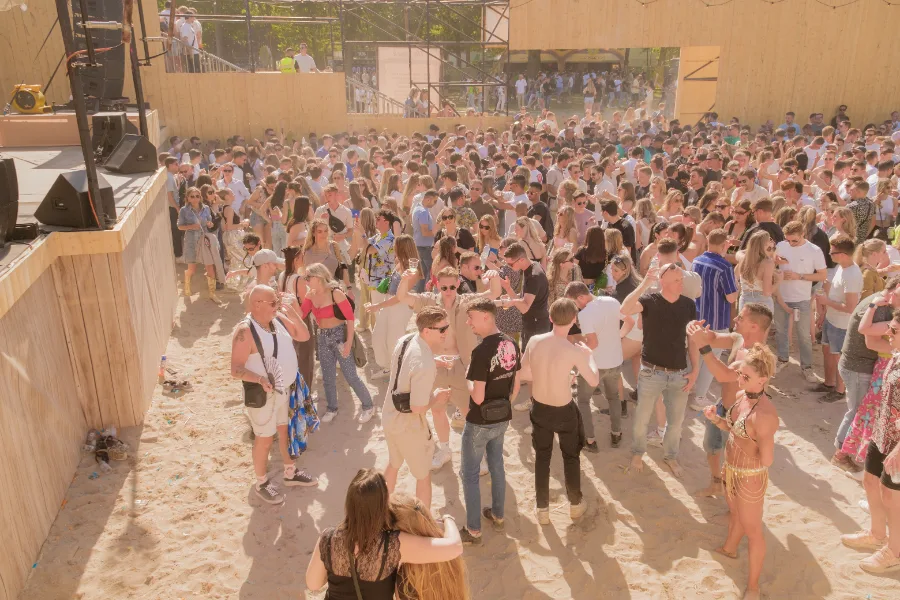
The most recent one was Open Air — Under the Stars on 14 August 2026: open-air, all night through to sunrise, twelve slots — RebelØ, Nemoist, RAWMIX, Elyx, Nijat, Javi, Risk Assessment b2b Ovnik, Buse Muslu, Allterverse b2b Faiyaz, NAYARA b2b Asli, Diney JayzZ b2b Mind of Zen and TwiZted RoZe. Twelve slots is a lot to hold together for one night, and it held. The floor stayed full through to the light.
Go down the entries on the events list and you'll count a lot of location TBA. That's not mystique and it isn't a marketing trick we're proud of. Open-air sites get confirmed late, sometimes very late, and announcing a place before it's real is how you strand two hundred people. Our three residents — Javi, Nijat and Nemoist — carry the sound between all of it.
Back-to-back is the local dialect
Four of the twelve slots on the August floor are b2b; three of eleven at Cherry Beach on 25 July, two of ten on 11 July. That's a choice, not a coincidence. Toronto's pool of techno DJs is deep, the number of rooms willing to book them is not, and pairing two people for one slot is how you put more of the city on the floor without turning the night into a relay of twenty-minute cameos. It also exposes people fast. Two DJs who don't actually listen to each other are audible within four bars.
If you're looking for a night
Start with what's confirmed. Our current dates and lineups are on the events list — that's the version we update, and where an entry shows no venue, we never got to announce one — that's the honest state, not a tease. Beyond us, Resident Advisor's Toronto page is the closest thing to a citywide index — though in our experience it skews toward rooms that hold a licence, and away from the open-air and one-off floors that make up most of a Toronto summer.
Practical, and slightly unromantic: open-air here is a June-to-September proposition, daytime sets end when the sun does, and the interesting part of a night that starts at 22:00 is rarely before 1 a.m. Come late, leave later.
If you want to play
We read everything that comes through the apply form. What gets a reply is a recorded set — one link, unedited, long enough to hear you build something — rather than a follower count or a list of clubs you've been to. We book people we've heard, and the fastest way to be heard is to be on a floor we're standing on. Come to one. The directory tells you who else plays here, and most of them got in the same way.